

 Contact Now
Send Message
Privacy statement: Your privacy is very important to Us. Our company promises not to disclose your personal information to any external company with out your explicit permission.

Shaanxi Kaishi Biotechnology Co., Ltd

$2.5
1-24 Kilogram
$1.8
25-99 Kilogram
$1.2
≥100 Kilogram


Product Description
Sodium bicarbonate is an inorganic alkaline salt widely used as a food additive, buffering agent, leavening component, effervescent ingredient, and formulation aid. Its predictable alkalinity, high solubility, and carbon dioxide release under acidic conditions make it valuable for food, pharmaceutical, personal care, and industrial formulations.
Also known as baking soda or sodium hydrogen carbonate, sodium bicarbonate is supplied as a white crystalline powder with a mildly alkaline character. For B2B formulation, grade, purity, particle characteristics, and application-specific standards should be selected according to the finished product and processing conditions.
Sodium bicarbonate has the chemical formula NaHCO3 and a molecular weight of 84.01 g/mol. When exposed to acids, it reacts to release carbon dioxide, which makes it useful for chemical leavening, effervescent systems, pH adjustment, and gas-generating formulations.
Its combination of alkalinity, relatively simple composition, and established industrial use allows sodium bicarbonate to serve different formulation roles. The appropriate specification depends less on the name of the ingredient than on the intended application, purity requirement, particle characteristics, and applicable quality standard.
| Item | Specification |
|---|---|
| Product Name | Sodium Bicarbonate |
| Synonyms | Sodium Hydrogen Carbonate; Baking Soda |
| CAS Number | 144-55-8 |
| Molecular Formula | NaHCO3 |
| Molecular Weight | 84.01 g/mol |
| Appearance | White crystalline powder or fine crystalline solid |
| Assay | Common high-purity grades are typically 99.0% or higher; application-specific specifications available |
| Test Method | Acid-base titration and applicable pharmacopoeial or food-grade analytical methods |
| Solubility | Soluble in water; solubility varies with temperature |
| pH Character | Mildly alkaline in aqueous solution |
| Common Grades | Food grade, pharmaceutical grade, and technical/industrial grade, according to application requirements |
| Particle Size | Standard and customized particle-size options available according to formulation requirements |
| Shelf Life | Commonly 24 months under recommended storage conditions |
| Storage | Store in a cool, dry place in a tightly closed package, protected from moisture and contamination |
| Packaging | Commonly 1 kg or 5 kg aluminum foil bags and 25 kg fiber drums; customized packaging available |
| Bulk Supply | Bulk quantities and customized procurement specifications supported |
Sodium bicarbonate is widely used as a chemical leavening component in baked goods. It can also function as an acidity regulator, pH-adjusting ingredient, and processing aid in selected food formulations.
In combination with suitable acidic ingredients, sodium bicarbonate releases carbon dioxide in water. This makes it an important component of effervescent tablets, powders, and other gas-generating formulations.
Pharmaceutical-grade sodium bicarbonate is used in formulations where controlled alkalinity, buffering, or effervescence is required. The applicable pharmacopoeial standard should be matched to the intended market and dosage form.
Sodium bicarbonate may be incorporated into selected oral-care, cleansing, deodorizing, and personal-care formulations where mild alkalinity and powder functionality are desirable.
Technical grades are used in selected industrial processes, including pH adjustment, cleaning-related applications, and other processes requiring an alkaline inorganic salt.
For procurement, the most important distinction is the intended application rather than simply the nominal purity. Food and pharmaceutical applications require tighter control of applicable impurities and documentation, while industrial applications may prioritize process performance and cost efficiency. Particle characteristics can also influence dispersion, dissolution, compression, and reaction behavior.
| Application | Preferred Specification Focus | Procurement Consideration |
|---|---|---|
| Bakery and food processing | Food-grade purity and applicable food standards | Check assay, impurities, moisture, particle characteristics, and food-grade documentation |
| Effervescent tablets or powders | High-purity grade with suitable particle characteristics | Evaluate reaction consistency, dissolution behavior, moisture control, and compatibility with the acid component |
| Pharmaceutical formulations | Applicable pharmacopoeial specification | Confirm the required pharmacopoeia, analytical methods, impurity limits, and documentation for the target market |
| Personal care formulations | Appropriate purity and formulation-compatible physical properties | Consider particle size, dispersion, moisture handling, and finished-product requirements |
| Industrial processing | Technical or process-specific specification | Balance purity, particle characteristics, process performance, and bulk procurement cost |
Particle size is a practical purchasing consideration when sodium bicarbonate is used in tablets, powders, dry blends, or rapidly reacting systems. Finer material can offer faster dispersion and reaction, while other formulations may require controlled flow and handling characteristics. Particle size should therefore be specified around the actual processing requirement rather than selected solely by nominal purity.
Common commercial packaging includes 1 kg and 5 kg aluminum foil bags for smaller-volume handling and 25 kg fiber drums for bulk ingredient procurement. Packaging can be customized according to shipment, storage, labeling, and finished-product requirements.
For moisture-sensitive handling, buyers should use tightly sealed packaging and minimize prolonged exposure to humid environments during opening, dispensing, and repacking.
Sodium bicarbonate can be incorporated into customized ingredient solutions and finished-product programs. Available support may include formulation adjustment, dosage-form development, customized packaging, labeling, private-label production, and bulk ingredient supply, depending on project requirements.
For customized projects, the specification should define the intended application, grade or applicable standard, assay requirement, particle characteristics, packaging format, and target market so that procurement and quality-control requirements remain aligned.
Quality control for sodium bicarbonate should be aligned with the selected grade and end use. Batch-level testing may include:
For regulated food or pharmaceutical applications, incoming quality review should also confirm that the supplied documentation and analytical specification correspond to the required standard for the target market.
Select the grade according to the finished product, target market, and applicable standard. Food applications normally require compliance with the relevant food specification, while pharmaceutical applications require the applicable pharmacopoeial requirements and tighter documentation controls.
Yes. Particle characteristics can influence dispersion, dissolution, reaction rate, powder flow, and tablet processing. Buyers should specify particle requirements based on the formulation process rather than assuming that the finest available powder is always the best option.
For commercial sourcing, review the COA, TDS, SDS, applicable specification, analytical methods, packaging information, and batch identification. For regulated applications, also confirm that the documentation corresponds to the required food or pharmacopoeial standard.
Keep sodium bicarbonate in a tightly closed package in a cool, dry environment and protect it from moisture and contamination. Good warehouse practice includes minimizing repeated exposure to humid air during opening, dispensing, and repacking.
Sodium bicarbonate is a versatile inorganic ingredient with established uses in food, effervescent, pharmaceutical, personal care, and industrial formulations. Selecting the appropriate grade, analytical standard, particle characteristics, packaging, and documentation helps buyers achieve consistent processing and quality control.
Contact us today to request samples, a COA, technical documents, and a wholesale quotation for sodium bicarbonate.
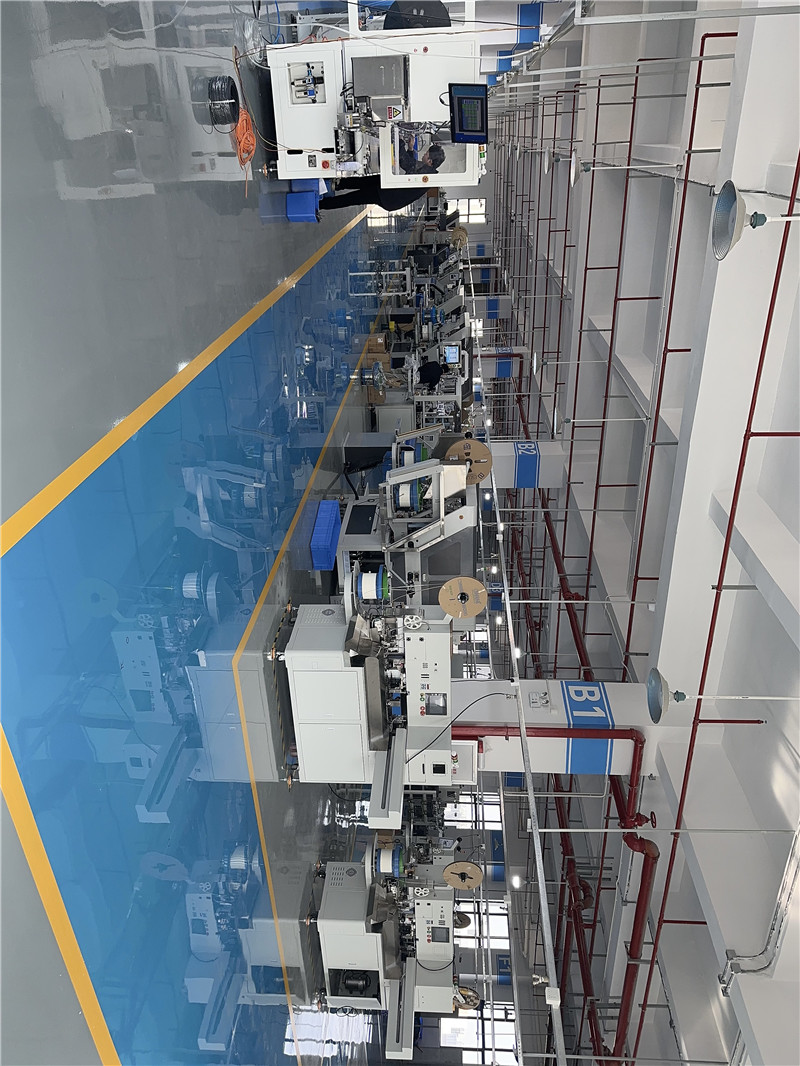
Packaging & Delivery
| Selling Units: | Kilogram |
|---|
The file is encrypted. Please fill in the following information to continue accessing it


Privacy statement: Your privacy is very important to Us. Our company promises not to disclose your personal information to any external company with out your explicit permission.
Fill in more information so that we can get in touch with you faster
Privacy statement: Your privacy is very important to Us. Our company promises not to disclose your personal information to any external company with out your explicit permission.