


Send Message
Privacy statement: Your privacy is very important to Us. Our company promises not to disclose your personal information to any external company with out your explicit permission.

Shaanxi Kaishi Biotechnology Co., Ltd
USD 60 - 80 / Others
Product Overview Tylosin tartrate is a macrolide veterinary active pharmaceutical ingredient (API) widely used in animal health formulations for livestock and poultry applications. It is supplied as a high-purity powder for veterinary pharmaceutical...
USD 90 - 130 / Bag/Bags
Brand:kaishibio
Model No:KS-20260302
Product Overview Acriflavine Powder is a synthetic antiseptic compound widely used in pharmaceutical formulations, veterinary medicine, and aquaculture health management. It belongs to the acridine dye class and exhibits broad-spectrum antimicrobial...
USD 98 - 130 / Bag/Bags
Brand:kaishibio
Model No:KS-20260302
Product Overview Acriflavine Powder is a broad-spectrum antimicrobial active ingredient used in pharmaceutical, veterinary, aquaculture, and selected agricultural applications. It belongs to the acridine dye class and exhibits strong antibacterial...
USD 90 - 130 / Bag/Bags
Brand:kaishibio
Model No:KS-20260302
Product Overview Acriflavine Powder is a synthetic antiseptic compound widely used in pharmaceutical formulations, veterinary medicine, and aquaculture health management. It belongs to the acridine dye class and exhibits broad-spectrum antimicrobial...
USD 110 - 130 / Kilogram
Brand:kaishibio
Transportation:Ocean,Land,Air,Express
Packaging:1kg/bag 25kg/drum
Supply Ability:5000kg
Place of Origin:Xi'an;Shaanxi
Productivity:5000kg
Product Overview Acriflavine Powder is a synthetic antiseptic compound widely used in pharmaceutical, aquaculture, and laboratory applications. As part of advanced Nutritional Ingredients and functional chemical solutions, acriflavine plays a...
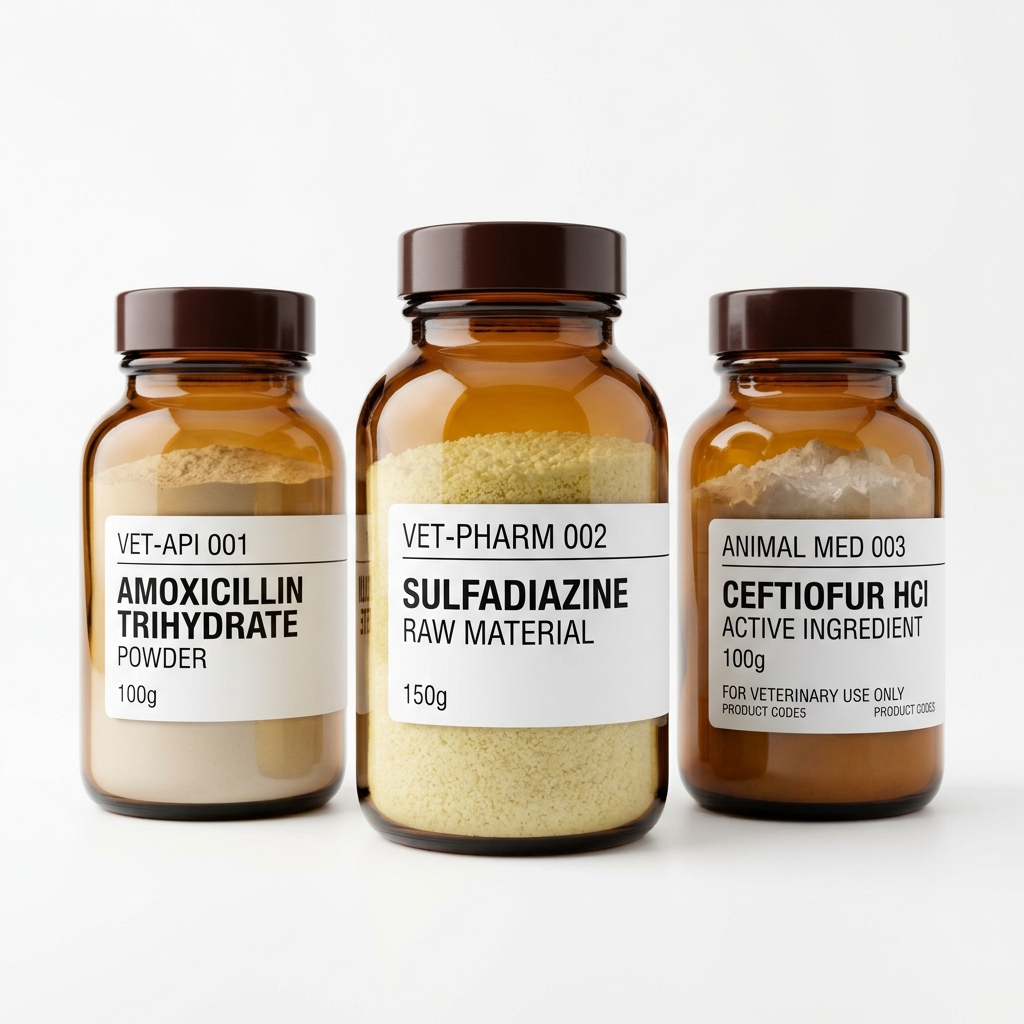
Veterinary APIs includes active ingredients supplied for professional animal health formulation, research, qualification, and sourcing projects. Products in this category should have a clearly identified active ingredient, technical specification, intended veterinary application, and supporting product documentation.
Veterinary APIs may differ in chemical identity, molecular or salt form, assay, purity, impurity profile, residual solvents, particle size, physical form, and analytical method. These characteristics can affect formulation, processing, storage, stability, and suitability for the intended veterinary dosage form.
A general purity statement does not provide a complete basis for evaluating a veterinary active ingredient. The product specification, analytical method, impurity requirements, and intended application should be reviewed together.
Buyers should confirm the ingredient name, chemical form, specification, assay method, relevant impurity limits, storage conditions, packaging, shelf life, and available analytical documentation. The intended animal species, dosage form, formulation type, application, and destination market should also be identified.
Documentation, sample availability, batch quantity, packaging, testing, and supply conditions may differ between products and projects. These details should be confirmed before technical qualification or commercial evaluation.
A veterinary active ingredient should be evaluated according to the intended species, life stage, dosage form, route of administration, formulation components, and relevant quality requirements. Suitability for one species or formulation should not be assumed to establish suitability for another.
Particle size, solubility, pH, stability, interaction with excipients, and processing conditions may influence the development of powders, tablets, liquids, premixes, or other veterinary formulations. Product-specific technical assessment is required before formulation use.
The regulatory status of a veterinary API depends on the specific active ingredient, manufacturing source, production process, quality system, intended species, dosage form, application, and destination market. Inclusion in this category does not establish registration, approval, pharmacopeial compliance, or authorization for use in a veterinary medicine.
Buyers should verify the applicable qualification, registration, labeling, residue, withdrawal, handling, and market requirements. Statements concerning GMP status, pharmacopeial grade, regulatory filings, approval, or withdrawal periods should only be made when supported by current product-specific documentation.
Acriflavine is retained as a historical internal-link term because it already appears in existing website content. However, the presence of the term Acriflavine does not by itself establish that a specific product is a veterinary API.
Each Acriflavine product should be evaluated according to its composition, specification, intended use, target species, regulatory identity, and supporting documentation. Products positioned as disinfectants, laboratory materials, aquaculture treatments, or other technical products may require a different classification and should not be described as feed additives without appropriate evidence.
This category is intended for active ingredients with a clearly documented veterinary pharmaceutical identity. Finished veterinary medicines, disinfectant products, Animal Feed Additives, Nutritional Ingredients, Veterinary Herbal Extracts, human Pharmaceutical APIs, and products without a verified veterinary active-ingredient role should remain outside this category.
This category provides ingredient and sourcing information only. It does not provide veterinary treatment, dosage, prescribing, administration, or withdrawal-period guidance.
Privacy statement: Your privacy is very important to Us. Our company promises not to disclose your personal information to any external company with out your explicit permission.
Fill in more information so that we can get in touch with you faster
Privacy statement: Your privacy is very important to Us. Our company promises not to disclose your personal information to any external company with out your explicit permission.